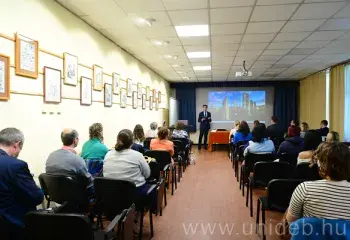
This year, the University of Debrecen hosted the annual meeting of specialists in Dutch studies from Hungary. The conference, which was held on Friday, October 2, at the headquarters of the Debrecen Academic Committee, focused primarily on the teaching of the Dutch language in secondary and higher education.
News

The topics of the visit of the Ambassador of the Kingdom of the Netherlands to Hungary to the University of Debrecen were the opportunities for academic cooperation and exchange programs for tutors, researchers and students. Willem van Ee was received by Jenei Attila Vice-Rector for International Affairs.

Visitors to the Chinese Mid-Autumn Festival were awaited with traditional music, dance, culinary specialties, craft workshops and market stands this past weekend. The event was organized along the pedestrian street called Batthyány utca on September 26 by the Confucius Institute of the Faculty of Humanities at the University of Debrecen. The full-day program ended in the evening with a Chinese disco, and all the attendees had the opportunity to try mooncakes, which are a symbolic treat related to this festivity.
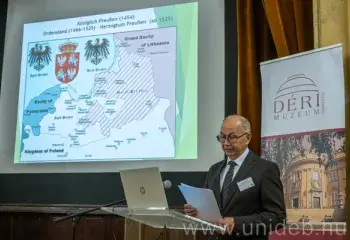
An international conference of historians titled “Towns in Transition in a Changing World — Central European Towns in the Early Modern Period” was held on September 17–18 by the Institute of History at the Faculty of Humanities (BTK) and the Déri Museum. At the academic conference—which drew participants from six countries—Professor Roman Czaja, an honorary doctorate recipient of the university, as well as several other faculty members from the University of Debrecen, delivered presentations.
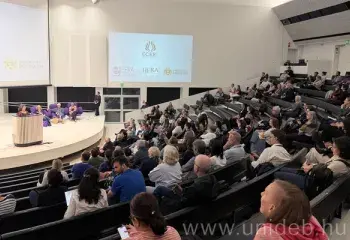
European Conference on Educational Research (ECER), which was hosted this year in Tampere, Finland, has officially ended. This latest event drew 3,619 participants from as many as 82 different countries, including 51 from Hungary. During the course of the closing ceremony, it was announced that the University of Debrecen would act as the host for the next professional gathering in August 2027.
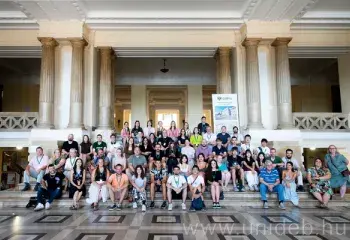
The 2026 course of Debrecen Summer School has come to an end, and a total of 116 certificates have been awarded by the organizers to the participants, half of whom studied Hungarian for the entire length of four weeks, while the other half took turns in staying for either the first or the second two weeks of the course. As all of them passed the final exam successfully, these language learners were satisfied and happy without exception when they returned home on August 15.
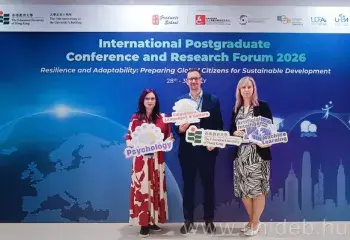
The Education University of Hong Kong (EdUHK), ranked 7th in the QS World University Rankings for Education and Training, hosted an international conference between July 28 and 31 with the participation of researchers from more than twenty different countries. The Faculty of Humanities of the University of Debrecen was also represented at the event, where its delegates presented current research activities conducted at our university and discussed further opportunities for collaboration.
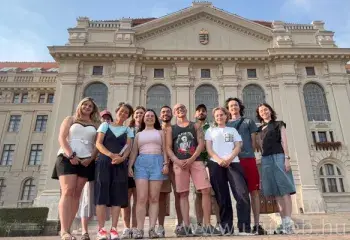
The international English-language linguistics summer course OVA 2026 (Omnes Voces Acceptamus 2026) was held for the first time in Debrecen between July 27 and August 7 by the Department of English Linguistics at the Institute of English and American Studies of the Faculty of Humanities (BTK). All in all, there were approximately 100 participants coming to our city from more than 20 different countries for this event in order to expand their knowledge of linguistics with the help of a distinguished international faculty of instructors.
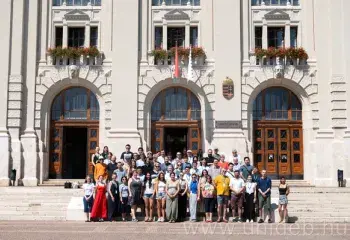
Sixty students received their certificates at the end of the second week at the Debrecen Summer University, and thirty-three new students arrived for the next session. Everyone did well on the exam, and the new students have successfully integrated into their groups, where they continue to study the Hungarian language diligently.
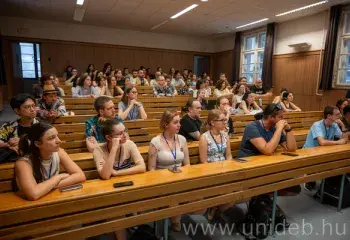
It is for the first time that the Department of English Linguistics at the Institute of English and American Studies, Faculty of Humanities, University of Debrecen, hosts an English-language international linguistics summer course titled OVA 2026 (Omnes Voces Acceptamus 2026). Nearly one hundred students from almost ten countries came to Debrecen for the event, held between July 27 and August 7, 2026, in order to expand their knowledge of linguistics with the help of a distinguished international faculty of instructors.